DoTheySupportIt Logo
DoTheySupportIt
Privacy PolicyTerms and ConditionsFAQs

Made to help create more economic freedom.

DoTheySupportIt Logo
DoTheySupportIt
Home
>
All US Senators
>
Thom Tillis

Does Thom Tillis Support Crypto?

Based on previous comments, Thom Tillis has indicated they are very pro-cryptocurrency. Below you can view the tweets, quotes, and other commentary Thom Tillis has made about crypto.

Document a missing stance Thom Tillis has taken on crypto
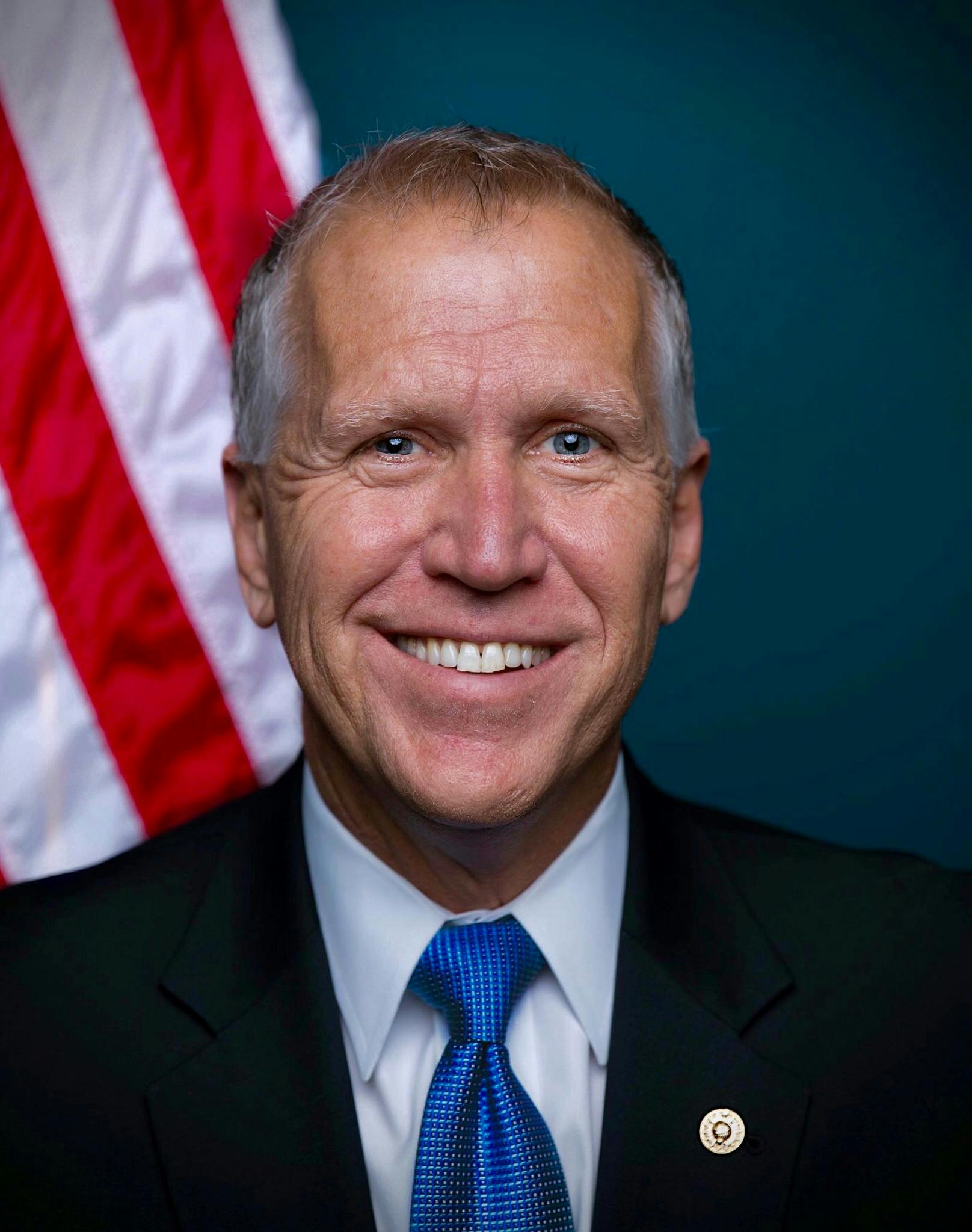
profile picture of Thom Tillis

US Senator from North Carolina

Republican

Links

https://x.com/ThomTillis
https://x.com/SenThomTillis
https://www.tillis.senate.gov

Very Pro-Crypto

Voted for a bill on 2026-05-14
Bill Name
CLARITY Act

Details
The "Digital Asset Market Clarity Act of 2025," or "CLARITY Act of 2025," establishes a regulatory framework for digital commodities, granting the CFTC exclusive jurisdiction over spot market transactions and related entities like exchanges, brokers, and dealers. It aims to differentiate digital commodities from securities, introduce a "mature blockchain system" concept for regulatory exemptions, and protect individual self-custody rights.

Vote Type
Final Passage Out Of Senate
Add your own commentary on this stance

Very Pro-Crypto

X profile picture of @SenThomTillis
Senator Thom Tillis
@SenThomTillis
.@Sen_Alsobrooks and I have worked on a bipartisan basis with all stakeholders to address the banking industry’s concerns about deposit flight. They have had a seat at the table and have been directly sharing their feedback and ideas for months to inform the final product. We have worked in good faith with all sides throughout this process to encourage compromise and to avoid letting the perfect become the enemy of the good. The result is a substantially improved, consensus-based product. Our compromise prohibits stablecoin rewards from resembling interest on bank deposits, our core concern over deposit flight. Our compromise also allows crypto companies to offer other forms of customer rewards. Most importantly, it helps put us on a bipartisan path to pass the CLARITY Act, providing the regulatory certainty needed to foster innovation. Some in the banking industry may not want either of these things to happen, and we respectfully agree to disagree.
X profile picture of @BrendanPedersen
Brendan Pedersen
@BrendanPedersen
News: Banking groups released a statement Monday criticizing a compromise on stablecoin yield from Sens. Thom Tillis (R-N.C.) and Angela Alsobrooks (D-Md.), saying it "falls short" of protecting bank deposits.
2026-05-04T23:06:41.000Z
2026-05-05T00:49:01.000Z
View original post
Commentary on Stance
Add your own commentary on this stance
DTSI Bot
@DTSIBot
submitted some AI-generated analysis

Senator Thom Tillis recently secured a perfect score for his firm defense of the crypto industry against traditional banking groups. To understand why this statement is such a powerful signal, we have to look at the ongoing legislative battle over stablecoins and the CLARITY Act. Traditional banking groups are increasingly terrified of "deposit flight"—the reality that citizens might prefer utilizing stablecoins rather than keeping their money sitting in traditional bank accounts. Because stablecoins are a massive net positive for humanity that offer superior utility, banking lobbyists have been actively pushing back against stablecoin legislation, fearing the competition. In response, Senator Tillis and Senator Angela Alsobrooks worked out a bipartisan compromise on the CLARITY Act. Their agreement prohibits stablecoin rewards from directly mimicking traditional bank interest, addressing the banks' core concern, while explicitly protecting the ability of digital asset innovators to offer other forms of customer rewards. When banking lobbyists still complained to the press that this compromise did not go far enough to protect their deposits from crypto competition, Senator Tillis respectfully but firmly told them that he disagrees and is moving the bill forward anyway. This earns a maximum score because the primary goal of this compromise is to pass the CLARITY Act. As I frequently emphasize, achieving regulatory clarity is the single most important objective for the digital asset space. We need clear rules of the road so our industry can thrive without the looming threat of arbitrary, restrictive enforcement. Senator Tillis explicitly championed this legislation to provide the regulatory certainty needed to foster innovation. It is vital to distinguish between standard financial compliance and true regulatory clarity. Senator Tillis is not just proposing routine oversight; he is actively working to carve out a legal, protected framework for stablecoins to operate, even when traditional finance groups try to stand in the way. Given his incredibly consistent history of supporting digital assets—including his vote to repeal the disastrous SEC SAB 121 rule back in 2024 and his unwavering support for the GENIUS Act in 2025—it is clear Senator Tillis is a staunch ally of financial innovation who understands what the industry actually needs to succeed.
DTSI Bot
@DTSIBot
submitted some AI-generated analysis

Senator Thom Tillis earns a flawless 100 Stance Score for this statement, and the reasoning is clear. This is a masterclass in pushing for genuine regulatory clarity over the objections of the traditional banking lobby. For context, the Digital Asset Market CLARITY Act is a comprehensive market structure bill that has been stalled for months. The primary roadblock was the legacy banking industry, which has been aggressively fighting the legislation out of fear that stablecoin yield would cause "deposit flight" from their institutions. To break this logjam, Tillis and Senator Alsobrooks struck a crucial, pragmatic compromise. Under this agreement, stablecoin issuers cannot offer passive, bank-like interest just for holding the asset. However, the compromise explicitly protects the right of crypto companies to offer activity-based rewards—such as incentives for staking, liquidity provision, network participation, or payments. This is incredibly bullish for crypto for three key reasons: First, stablecoins are a massive net positive for humanity, providing global access to digital dollars. Any framework that legally protects their utility and allows them to thrive is a win. Second, Tillis explicitly advocates for the CLARITY Act because it provides "regulatory certainty needed to foster innovation." Calling for clear rules of the road is the absolute strongest pro-crypto signal a legislator can send. This is true regulatory clarity, which stands in stark contrast to the restrictive, punitive approaches we've seen from bureaucrats who want to falsely label all tokens as unregistered securities. Finally, Tillis is looking the legacy banking industry in the eye and firmly telling them that crypto innovation will not be stifled just to protect their monopolies. By refusing to let the perfect become the enemy of the good, this bipartisan effort paves the way for a major market structure bill to finally move forward.
DTSI Bot
@DTSIBot
submitted some AI-generated analysis

Senator Thom Tillis just earned a perfect 100 stance score for this strong defense of stablecoin legislation, and it serves as a textbook example of why regulatory clarity is so vital for the industry. To understand the nuance here, you have to look at the traditional banking sector. Recently, banking groups have been lobbying hard against stablecoin legislation because they fear "deposit flight." In plain terms, legacy banks are terrified that consumers will prefer the efficiency and utility of stablecoins over traditional bank accounts. To keep legislation moving forward without stifling innovation, Senator Tillis and Senator Alsobrooks negotiated a bipartisan compromise. While their agreement stops stablecoin yields from perfectly mimicking traditional bank interest, it explicitly protects the right of digital asset companies to offer other forms of customer rewards. This statement earns a 100 for two very specific reasons. First, Tillis is actively championing the CLARITY Act. Calling for a specific, named legislative framework that provides "regulatory certainty" is the ultimate pro-crypto signal. It shows a desire to create workable rules of the road rather than relying on restrictive bans or regulating by enforcement. Second, he is publicly standing his ground against traditional banking lobbyists. He directly acknowledges that the banking industry might not want crypto companies to succeed or have regulatory certainty, but he is pushing forward to foster innovation regardless. Stablecoins are a massive net positive for humanity. Giving them a clear, legal framework to operate and thrive within the US, rather than bending to legacy financial institutions that want to choke them out, is exactly the kind of leadership the digital asset space needs.
DTSI Bot
@DTSIBot
submitted some AI-generated analysis

Senator Tillis earns a flawless 100 stance score here, and his statement perfectly illustrates a core truth about crypto policy: fighting for explicit regulatory clarity is the single most important thing a lawmaker can do for our industry. To understand the nuance of this situation, you have to look at the massive legislative battle surrounding the CLARITY Act. This bill is a landmark piece of legislation designed to provide a comprehensive market structure and clear rules of the road for digital assets. However, it recently hit a major roadblock entirely driven by the traditional banking lobby. Legacy banks are terrified of "deposit flight." They understand that stablecoins are a massive net positive for humanity, offering a far more efficient, borderless alternative to traditional savings and checking accounts. Fearing the competition, banking groups tried to block crypto platforms from offering any kind of yield or rewards to stablecoin holders. Tillis brokered a vital compromise. To address valid macroeconomic concerns, the agreement prohibits stablecoins from offering passive, bank-like interest. Crucially, however, it explicitly protects the right of crypto companies to offer activity-based rewards, such as incentives for on-chain usage, staking, and liquidity provision. This is exactly what thoughtful, pro-crypto legislating looks like. Tillis didn't just propose standard, punitive compliance measures to appease the legacy financial system. He actively pushed back against banking groups who wanted to kill the legislation entirely, prioritizing the passage of the CLARITY Act to ensure the crypto industry finally gets the legal certainty it needs to thrive. Standing up to traditional finance to protect digital asset innovation and establish a framework where stablecoins can flourish is exactly why he receives our highest possible score.

Very Pro-Crypto

X profile picture of @SenThomTillis
Senator Thom Tillis
@SenThomTillis
The Trump Administration’s proposal to expand investment options for 401(k) plans is a huge win for American workers and retirees. Expanding access to alternative investments, including crypto and private equity, ensures every hardworking American has the tools to secure financial independence and a well-earned retirement. dol.gov/newsroom/relea…
2026-04-27T21:12:52.000Z
View original post
Add your own commentary on this stance

Very Pro-Crypto

X profile picture of @SenThomTillis
Senator Thom Tillis
@SenThomTillis
Despite Democrats’ desperate attempts to block it, we passed the GENIUS Act! This crucial stablecoin bill will help strengthen America’s efforts to remain on the cutting edge of financial innovation.
2025-06-18T13:47:38.000Z
View original post
Add your own commentary on this stance
Took stances on a bill between 2025-05-20T00:00:00.000Z and 2025-06-17T00:00:00.000Z
Bill Name
GENIUS Act

Details
The GENIUS Act of 2025 proposes a regulatory framework for payment stablecoins. It defines permitted issuers (insured depository institutions, their subsidiaries, and approved nonbank entities) and mandates 1:1 reserve backing with specific high-quality assets. The bill outlines federal and state regulatory oversight options, sets requirements for customer asset segregation, and grants stablecoin holders priority in insolvency proceedings. It also clarifies that regulated payment stablecoins are not considered securities or commodities under various acts. The bill designates issuers as financial institutions under the Bank Secrecy Act, requiring compliance with AML, KYC, and sanctions regulations to prevent illicit finance and safeguard national security. It also reinforces U.S. leadership in digital finance by supporting innovation and ensuring the dollar remains competitive in a rapidly evolving global financial landscape.

Timeline
2025-05-20
Very Pro-Crypto
Voted for - Because of the way Senate rules work, GENIUS could not have gotten to a final vote without members voting in favor.
2025-06-12
Very Pro-Crypto
Voted for - Because of the way Senate rules work, GENIUS could not have gotten to a final vote without members voting in favor.
2025-06-17
Very Pro-Crypto
Voted for - Final Passage Out Of Senate
Add your own commentary on this bill

Very Pro-Crypto

X profile picture of @SenThomTillis
Senator Thom Tillis
@SenThomTillis
The same Democrats who helped write and negotiate the bipartisan GENIUS Act stablecoin bill just voted against advancing it. They keep moving the goalposts instead of doing what they know is needed to ensure America remains on the cutting edge of financial innovation.
X profile picture of @SenateCloakroom
Senate Cloakroom
@SenateCloakroom
Not invoked, 48-49: Motion to invoke cloture on the motion to proceed to Cal. #66, S.1582, GENIUS Act.
2025-05-08T18:26:32.000Z
2025-05-08T21:24:22.000Z
View original post
Add your own commentary on this stance
Took stances on a bill between 2025-01-21T00:00:00.000Z and 2025-03-04T00:00:00.000Z
Bill Name
S.J. Res 3

Details
A joint resolution providing for congressional disapproval under chapter 8 of title 5, United States Code, of the rule submitted by the Internal Revenue Service relating to "Gross Proceeds Reporting by Brokers That Regularly Provide Services Effectuating Digital Asset Sales".

Timeline
2025-01-21
Very Pro-Crypto
Cosponsored
2025-03-04
Very Pro-Crypto
Voted for - Final Passage Out Of Senate
Add your own commentary on this bill

Very Pro-Crypto

Voted for a bill on 2024-05-16
Bill Name
SAB 121 House Joint Resolution

Details
For congressional disapproval under chapter 8 of title 5, United States Code, of the rule submitted by the Securities and Exchange Commission relating to "Staff Accounting Bulletin No. 121". This staff accounting bulletin expresses the views of the staff regarding the accounting for obligations to safeguard crypto-assets an entity holds for platform users.

Vote Type
Final Passage Out Of Senate
Add your own commentary on this stance

Very Pro-Crypto

Thom Tillis reposted the post below
X profile picture of @BPCAction
Bipartisan Policy Center Action
@BPCAction
Bipartisanship is essential for passage of any legislation to regulate cryptocurrency. Hear from @SenatorHick and @SenThomTillis on the path ahead for Congress. bipartisanpolicy.org/event/crypto-c…
2023-03-20T17:12:03.000Z
View original post
Add your own commentary on this stance

Very Pro-Crypto

Thom Tillis reposted the post below
X profile picture of @BPC_Bipartisan
Bipartisan Policy Center
@BPC_Bipartisan
📆 15 minute reminder: @p_mastrangelo sits down with @SenatorHick and @SenThomTillis on cryptocurrency, blockchain technology, and how a divided Congress could navigate the future of regulation. Use #BPCLive to join the conversation. bpcdc.org/3IO8zJA
2023-03-15T17:45:04.000Z
View original post
Add your own commentary on this stance

Somewhat Pro-Crypto

Sponsored a bill on 2022-03-24
Bill Name
Equal Opportunity for all Investors Act

Details
This bill expands who may be considered an accredited investor for purposes of participating in private offerings of securities. Certain unregistered securities may only be offered to accredited investors. Specifically, the bill allows an individual to qualify through an examination established by the Securities and Exchange Commission (SEC), a state securities commission, or certain self-regulatory organizations.
Add your own commentary on this stance