BREAKING: Democrat Insider Says: “DEMOCRATS WANT CRYPTO MANIPULATED SO THEY CAN MAKE MONEY” 
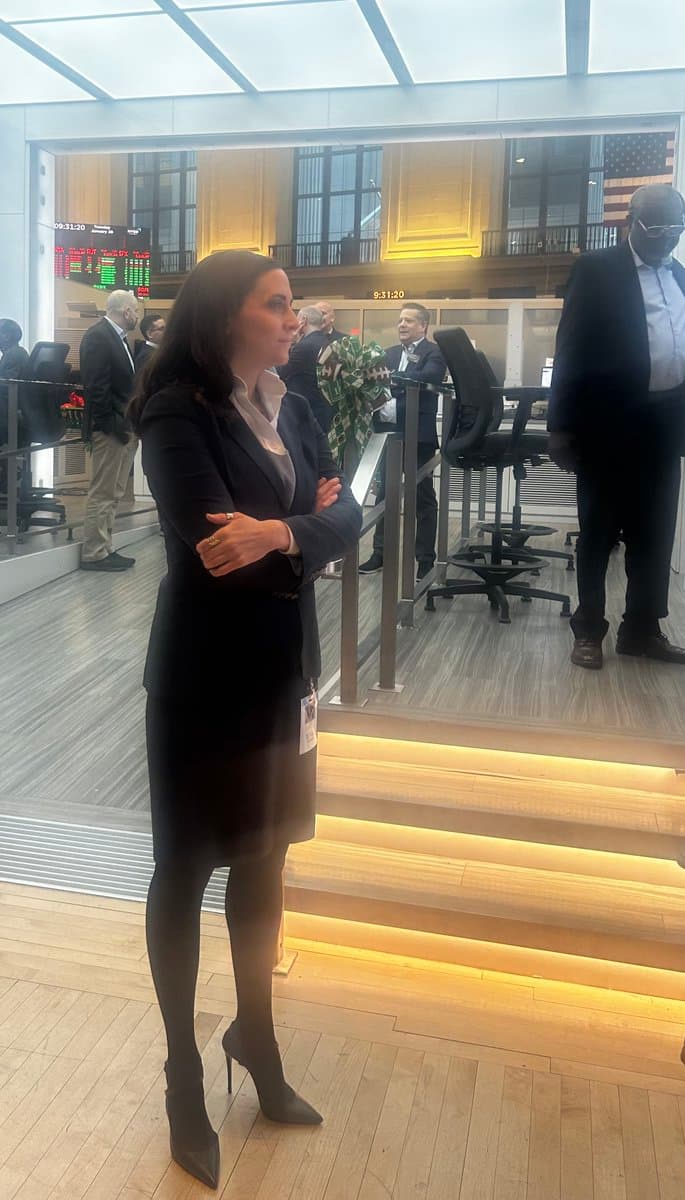
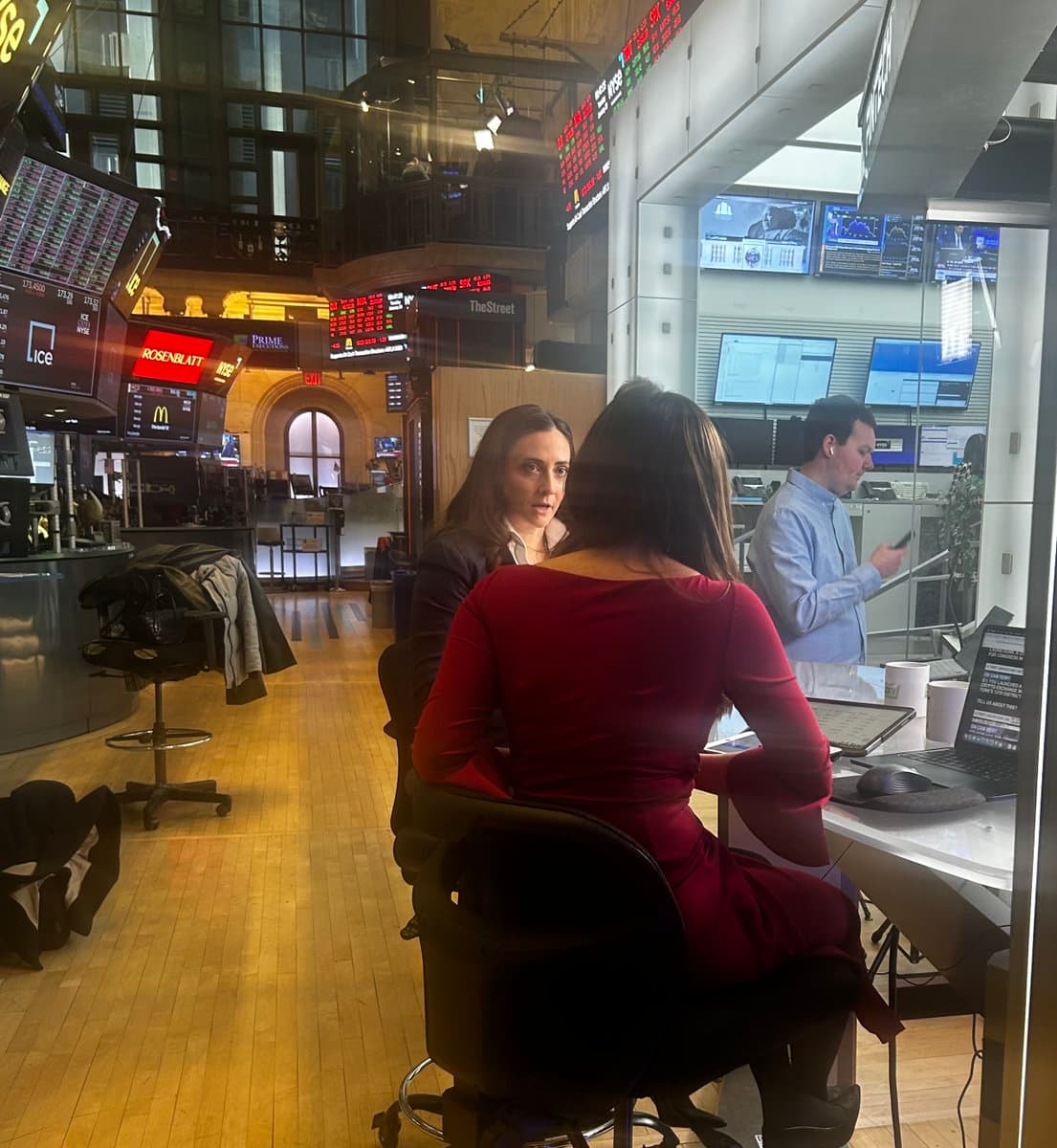
Laura Dunn (@LauraDunnNY12), a Democratic candidate for Congress, says there’s a group in Washington that wants crypto to stay messy, broken, and manipulatable — not to protect users, but to profit from it.
“I think there’s a group that does want it to be manipulated so that they themselves can make money.”
“If I’m sitting in Congress, I should not be allowed to use my inside information to bet on the market.”
She points to three core problems inside Congress:
Lack of understanding of crypto
Aging leadership out of touch with technology
Insider incentives to keep markets unstable



NEW: Bitcoin plunged 50% from its all-time highs this week amid forced liquidations and big investor sell-offs. Former CFTC Chair @giancarloMKTS joins to break down the crash, prediction markets, and his amicus brief defending federal oversight.
Plus, NY‑12 candidate @LauraDunnNY12 on her pro-crypto campaign, and Blockchain Association CEO @SummerMersinger on what the headlines missed from Monday’s White House meeting between crypto and banks on stablecoin yield. 


NEW: Bitcoin plunged 50% from its all-time highs this week amid forced liquidations and big investor sell-offs. Former CFTC Chair @giancarloMKTS joins to break down the crash, prediction markets, and his amicus brief defending federal oversight.
Plus, NY‑12 candidate @LauraDunnNY12 on her pro-crypto campaign, and Blockchain Association CEO @SummerMersinger on what the headlines missed from Monday’s White House meeting between crypto and banks on stablecoin yield. 
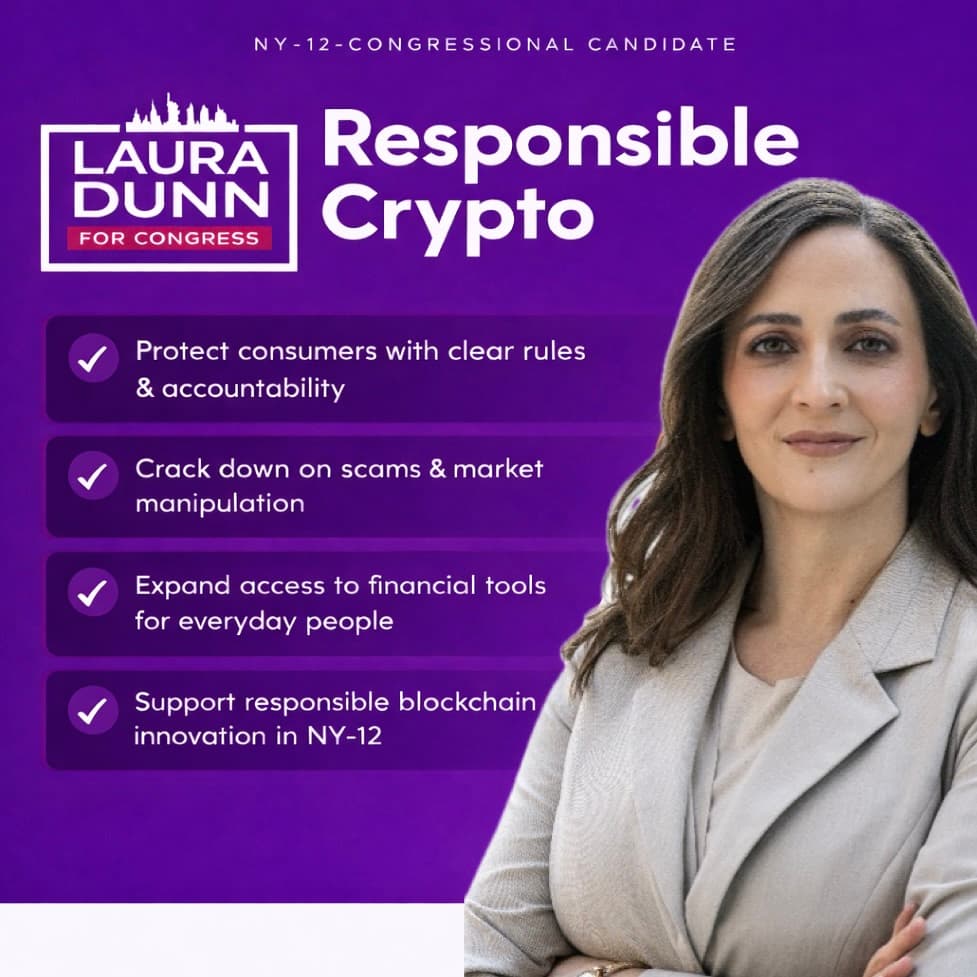
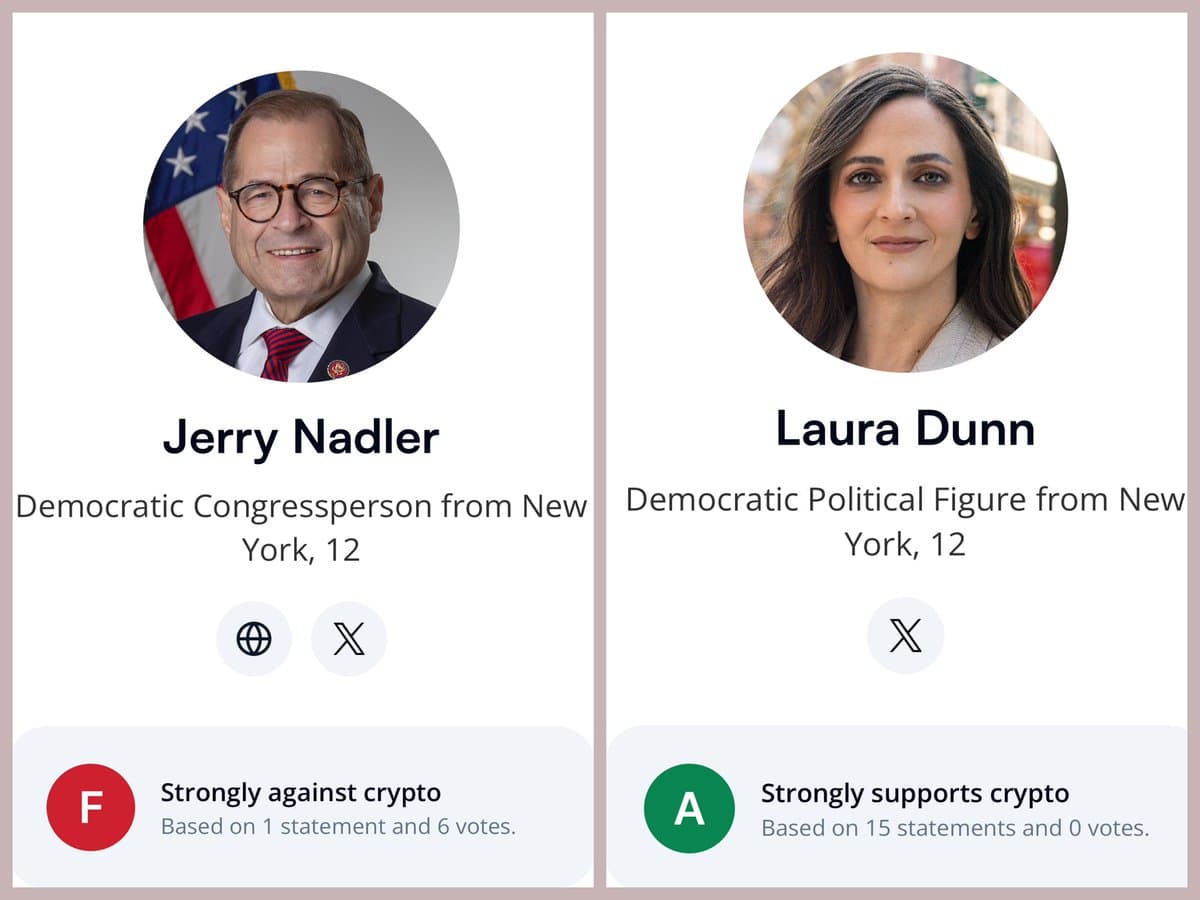
Laura Dunn completed the Stand With Crypto Questionnaire and expressed strong support for establishing clear legislative and regulatory pathways for digital assets, including defining when a digital asset is a security or a commodity. She advocates for the right to self-custody digital assets, ending de-banking of lawful crypto businesses, and fostering U.S.-based blockchain innovation through modernized regulations and transparent registration processes. Dunn also supports the House version of the Clarity Act and proposes legislation to protect against meme coin market abuses.


@LauraDunnNY12 launches an on-chain donation wallet powered by @MoonPay in the NY-12 race — transparency and blockchain education in action!
hblockster.com/laura-dunn-lau…
@blockstercom #Blockster #Web3News


Most new technologies are misunderstood leading to many questions and, sometimes, quick dismissals.
Bitcoin represents both a technological and generational evolution in asset ownership. It is only possible due to blockchain technology - which is just a unique database that ensures it is both transparent and immutable - and it tends to appeal to individuals who were primarily born in the mid-1970s or more recently. Lately though, it is getting increasingly more popular now that Bitcoin ETFs allow for traditional financial institutions to provide access to it.
Why the mid-1970s or more recently? These are the generations that were born into the rise of computing and gaming and, for the most part, are digital natives. Thus, just like the generation that lived during the Great Depression in the United States hoarded their money (sometimes at home), these newer generations feel comfortable with the notion of "Digital Ownership."
At the same time, most people born in the mid-1970s or more recently feel as though there is something wrong with the existing financial system. The credit system rewards debt, government spending, inflation and deficits are out of control, and most cannot afford to buy a home or have the luxuries that earlier generations had. This, in turn, has people seeking or exploring alternative routes to wealth creation.
A traditional definition of "value," suggests that something physical must be exchangeable for a good, however, I would posit that value may be defined by enough people believing there is value in something. In the case of Bitcoin, it is estimated that nearly 50M people own at least $1 of it. To provide a numerical reference point for comparison, Amazon has roughly 7,000 shareholders.
One of the biggest value propositions of Bitcoin is that it is mathematically pre-determined and pre-programmed. There is a fixed supply of 21 million and everyone knows how and when new Bitcoin comes into existence. There is no human decision making - which is a feature, not a flaw.
Since it's inception in 2009, it has only seen increased demand. Thus, part of Bitcoin's appeal is believing that in the future there will be increasingly more demand for it.
So here is a really crude way of thinking about how this is possible: If you believe that Bitcoin is partially a generational shift, then every day that someone from an earlier generation of majority, non-believers dies, someone from a newer generation of majority, believers is born. Thus, adoption would be an upward trend line in this scenario.
The Bitcoin ETFs - which have been recognized as the fastest growing, most successful ETFs of all time - are merely an accelerant to this adoption because they provide a structure within the existing, global financial ecosystem, where Financial Advisers are now incentivized to sell this offering to their clients.
And, this whole explanation does not account for changes in accounting laws, potential legislation or corporate and country adoption - all of which are slowly taking place.
Hope you found this helpful! If so, please RT as my goal is to simplify the understanding of Bitcoin for everyone.
And, if you are interested in potentially acquiring your first Bitcoin, please visit us at https://t.co/NHxBY3x2Fr!