



















































What Members of the U.S. House of Representatives Support Crypto?
Below is a list of all sitting U.S. house members and whether they are supportive of bitcoin and other cryptocurrencies. You can also view crypto stances broken down by house committees.
IN CASE YOU MISSED IT:
The Gizmodo article below, titled “Crypto Industry’s CLARITY Act Faces Major Setback,” speaks for itself.
You can access the article by clicking the link here: gizmodo.com/crypto-industr…
@RepFrenchHill and our colleagues on the @FinancialCmte have passed HISTORIC digital assets legislation. The House did its job more than a year ago by passing the nonpartisan Clarity Act. It's time for the Senate to ACT.
Interest rates have two components: time value of money and default risk. If central planners set rates artificially low, inflation goes higher. If markets set rates, they rise to ensure 1) the money lent buys the same amount of stuff when it is repaid (TVM) and 2) default risk the long run, markets set rates.
Default risk higher. TVM higher. Rates will be higher.
Stablecoins may provide some reliefby increasing demand for Treasuries. Stablecoins are theoretically more secure than fractional reserve banking, but yield needs to flow to the bearer for that to be true. Thus the fight about stablecoin yield...
Under Chairman Hill’s leadership, the Financial Services Committee is advancing policies that strengthen capital formation, expand access to capital, and reduce unnecessary regulatory burdens.
At today’s @FinancialCmte hearing, I questioned financial and technology experts about regulatory certainty facing their industries, capital formation, the surge in U.S. IPO activity, and how the GENIUS Act is protecting consumers while encouraging digital asset innovation. Watch:
As a member of the @FinancialCmte I’m working to provide clear rules of the road for digital assets.
The CLARITY Act gives innovators and investors greater certainty while establishing a clear regulatory framework for our markets.
Another great roundtable on Friday with @standwithcrypto and Iowa business and technology leaders about how crypto is helping Main Street lower payment fees, reach new customers, and access capital.
We’re working to establish clear rules of the road, crack down on fraud, and keep bad actors out of digital assets.
Warren Davidson replied to a post from @GareyCozad
Warren Davidson 🇺🇸
@WarrenDavidson
Ok, let me be more precise than @grok was, since several people seem to be missing the point cleverly made by @luke_broyles.
Scott has an income of $55,000 per year.
The US collects roughly $5.5 trillion in revenue (taxes, tariffs, etc)
Scott spends $75,000 per year ($10,000 on guns).
The US spend roughly $7.5 trillion per year, more than $1 trillion on Defense.
Scott grows his debt by $20,000 per year.
Total federal debt is growing exponentially, by about $2 trillion per year.
Scott has total debt right now of $400,000.
The US currently has $40 trillion in debt.
Scott has fixed unfunded liabilities of $1,750,000 and is less than 10 years from retirement.
Unfunded liabilities are promises to pay in the future, like Social Security.
Scott's own employees say that his 130% debt will be 690% by the year 2096.
CBO says nothing stops this train, and it's accelarating.
Scott needs to refinance roughly $100,000 in the next 12 months to stay solvent.
Bonds have a maturity date. The US must redeem the bond for its face value. We have no money, so more debt is needed.
What is happening now? Scott has a Japanese friend who is his biggest lender (despite being in even more debt) that just told Scott he might need to unwind $110,000 of Scott's debt to the open market. Therefore Scot sent his Japanese friend "$50-$100" this summer to keep him calm and ask him to not dump the debt.
This is a reference to US actions to deter Japan from dumping Treasuries.
The credit card companies Scott borrows from are refusing to give him cheap debt anymore, and are giving him 19 year highs on interest rates. Scott said on August 19th that because nobody is buying his credit card debt that he will "at least double" the rate he is buying back his own credit card debt with new debt he takes out.
This part relates to Scott Bessent's plan to monetize the debt. Since there are not enough buyers, the Treasury plans to buy back it's own debt. Circle...
The credit card companies didn't like that and offered him even higher rates 24 hours later.
Lenders correctly see this as a sign of distress, making default on the outstanding debt more likely. Consequently, market rates are moving higher.
Sound money is essential to defending freedom. We don't have sound money. Consequences will get worse. Make a plan. Luke's plan is Bitcoin.
.@POTUS is right!
@FinancialCmte and I have been saying it as well; the Senate needs to pass the CLARITY Act.
Clear, consistent crypto guidelines will give American innovators the security they need to keep leading the world in crypto innovation.
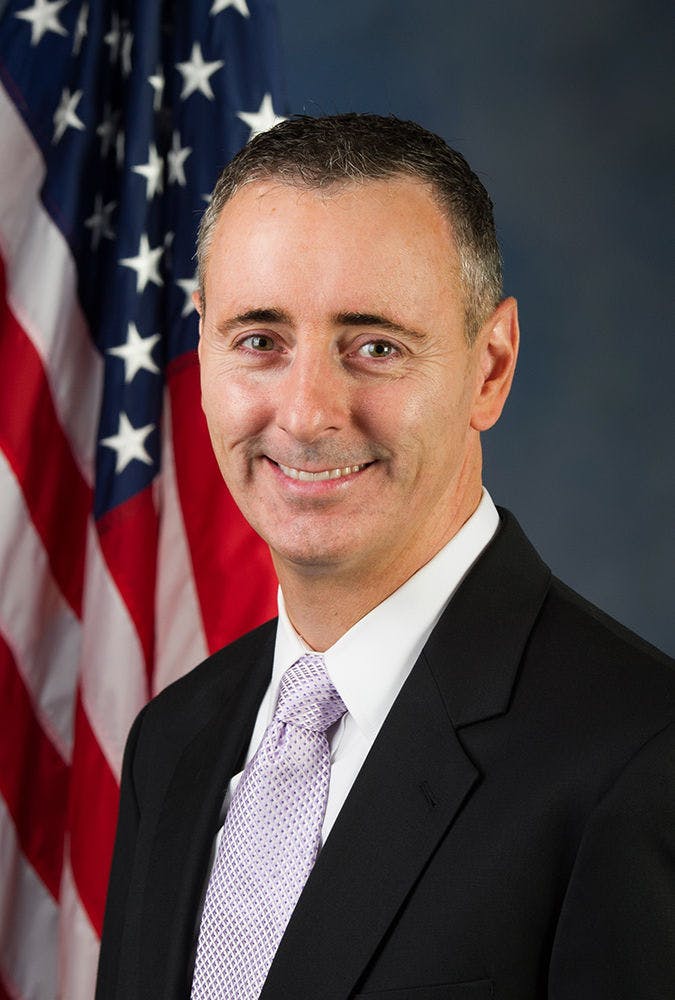
Brad Finstad completed the Stand With Crypto Questionnaire and expressed strong support for creating clear legislative pathways for digital asset businesses and a framework to define when digital assets are securities or commodities. He advocates for the right to self-custody digital assets, ending the de-banking of crypto businesses, and believes non-custodial software developers should not be regulated as financial intermediaries. Finstad also supports the Anti-CBDC Surveillance Act and legislation similar to the Digital Asset Market Clarity Act (HR 3633) to foster innovation.
.@USComptroller: Digital asset innovation is flourishing under @POTUS & @SecScottBessent. More than half of @USOCC applications received for new bank charters are related to digital assets – an eightfold increase from the Biden Administration.
We appreciate the SEC’s commitment to making the United States the premier destination for the digital asset ecosystem. It is time to enact the CLARITY Act and establish a functional framework that gives the digital asset ecosystem certainty and provides necessary protections for years to come.
Decentralized finance is built on the simple idea that one shouldn’t need permission from a handful of institutions to participate in the financial system.
America should embrace that innovation. I will keep fighting to establish clear rules to keep America as the Crypto Capital of the World.
We have already seen what debanking can do; a CBDC would put that power directly in Washington’s hands.
America must never build an economic kill switch.
Small businesses need tools built for digital asset demand.
At the Injective Summit, @RepHorsford spoke about helping them serve customers looking for new and better ways to transact.
Injective provides the infrastructure for fast, global stablecoin payments onchain.
Americans' financial freedom should never be at the mercy of an unelected Federal Reserve. A CBDC would open the door to unprecedented government surveillance of our finances.
Proud to join @RepMichaelCloud on the Permanent CBDC Ban Act to protect Americans' privacy for good.
ICYMI: I introduced the Stop Crypto ATM Scams Act because accountability shouldn't stop at a crypto ATM.
Scammers are stealing millions of dollars from Americans, especially seniors, by exploiting a lack of consumer protections. My bill would put common-sense safeguards in aud, and help ensure these companies are held accountable.
No one wants to go to prison. Nevertheless, a digital prison is being installed around western civilization.
Governments operate surveillance cameras, embed surveillance in nearly every device with an electron (cars, phones, computers, TVs, even appliances), track your bank and more. The income tax is a massive data harvesting operation. Now, they are building digital ID and Central Bank Digital Currency (CBDC).
To me, it all violates the 3rd Amendment. US citizens are being compelled to quarter the government at great personal expense and with massive peril to freedom. The threat to privacy is clear.
But, hey, maybe it's just to keep us all safe?
The Clarity Act establishes basic rules of the road for digital assets and cryptocurrency, giving innovators the certainty they need to build and invest in America. American innovation depends on getting this legislation across the finish line and ensuring the United States er in digital assets.
Thanks to everyone who helped make this year's Flyover Fintech yet another success.
From prediction markets to payments fraud prevention, stablecoins, and beyond, we had great discussions on the future of all things fintech.
Looking forward to seeing everyone again next year!
A ban on a government-controlled digital dollar shouldn’t disappear in 2030 and leave the door open for the next administration.
Proud to cosponsor @RepMichaelCloud's Permanent CBDC Ban Act to protect Americans’ financial privacy for good.
We have already seen what debanking can do; a CBDC would put that power directly in Washington’s hands.
America must never build an economic kill switch.
An expiration date is not a ban. It is an on-ramp.
The Permanent CBDC Ban Act is legislation that would permanently prohibit the Federal Reserve from issuing a central bank digital currency.
Press Release hcloud.house.gov/posts/release-…https://t.co/1l3mJ93Y5y
Americans' financial freedom should never be at the mercy of an unelected Federal Reserve. A CBDC would open the door to unprecedented government surveillance of our finances.
Proud to join @RepMichaelCloud on the Permanent CBDC Ban Act to protect Americans' privacy for good.
An expiration date is not a ban. It is an on-ramp.
The Permanent CBDC Ban Act is legislation that would permanently prohibit the Federal Reserve from issuing a central bank digital currency.
Press Release hcloud.house.gov/posts/release-…https://t.co/1l3mJ93Y5y
As Chairman of the Digital Assets Subcommittee, I want to make sure technology and innovation add real value to middle America. That’s why I was honored to speak at the “Flyover FinTech” conference hosted by @USRepMikeFlood.
Had a great fireside chat with @CFTC Chair Selig at this year's Flyover Fintech, discussing his priorities as well as his work on prediction markets!
We also had a thoughtful Q&A, covering the future of digital assets, financial innovation, and the evolving regulatory landscape.
The afternoon session will feature three panels and one presentation. The first panel, "Tackling Payments Fraud," will include panelists from Fiserv, FICO, Citi, and Plaid.
The presentation, "Nebraska's Telcoin Digital Asset Bank Charter," will be delivered by Telcoin Founder and CEO Paul Neuner.
The second panel, "Consumer Payment Tech," will be moderated by Congressman Dusty Johnson and feature panelists from Cash App, Zelle, and Amazon.
The final panel, "Innovation in Nebraska," will feature panelists from Marble Technologies, Exodus, Hudl, and Don't Panic Labs.
Our veterans deserve the best. Not decades-old government systems from the 1990s causing delays in benefits claims and leaving their personal and medical data exposed.
We reintroduced the Veterans Affairs Distributed Ledger Innovation Act to bring the VA into the 21st century. A to explore blockchain technology to enhance the efficiency, security, and transparency of its outdated systems.
We ask these men and women to lay down their lives for this country. The least we can do is make sure their benefits actually work.
No more excuses. No more bureaucratic failure. Our veterans deserve better.
Thank you @SecScottBessent for your support of my Blockchain Regulatory Certainty Act. Republicans in the House, law enforcement stakeholders, and the Trump administration are all in agreement: pass the Clarity Act now!