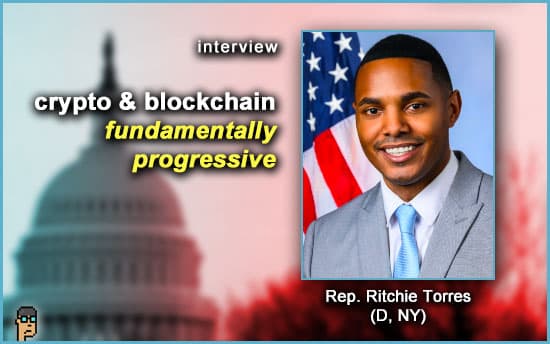
Based on previous comments, Ritchie Torres has indicated they are very pro-cryptocurrency. Below you can view the tweets, quotes, and other commentary Ritchie Torres has made about Bitcoin, Ethereum, and cryptocurrency innovation.
There is crypto as a computer: blockchain with productive use cases, such as the tokenization of real-world assets.
And then there is crypto as a casino.
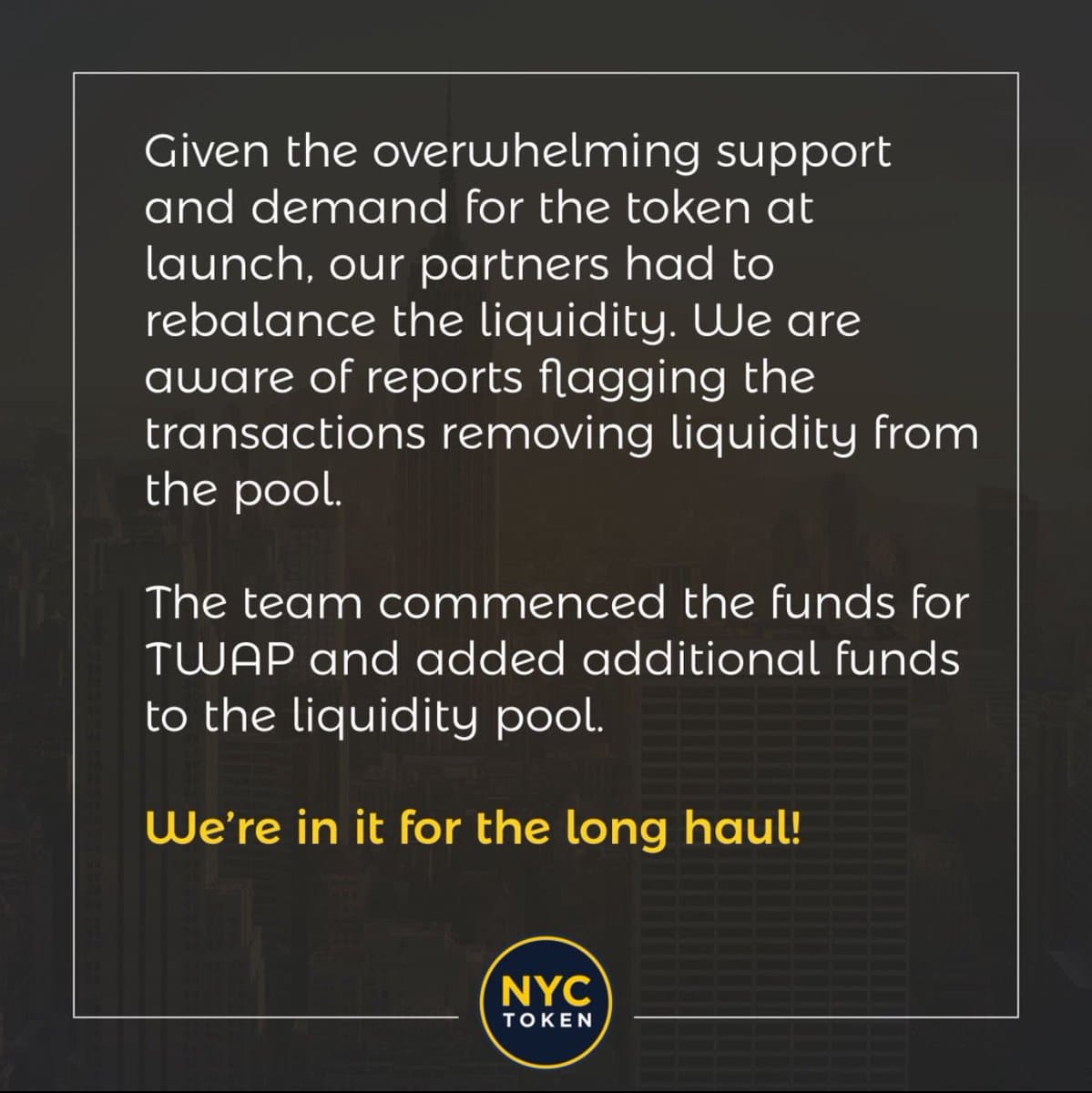
The so-called NYC Token—bizarrely marketed as a tool to combat antisemitism, despite having nothing to do with it—represents orst.
The GENIUS Act of 2025 proposes a regulatory framework for payment stablecoins. It defines permitted issuers (insured depository institutions, their subsidiaries, and approved nonbank entities) and mandates 1:1 reserve backing with specific high-quality assets. The bill outlines federal and state regulatory oversight options, sets requirements for customer asset segregation, and grants stablecoin holders priority in insolvency proceedings. It also clarifies that regulated payment stablecoins are not considered securities or commodities under various acts. The bill designates issuers as financial institutions under the Bank Secrecy Act, requiring compliance with AML, KYC, and sanctions regulations to prevent illicit finance and safeguard national security. It also reinforces U.S. leadership in digital finance by supporting innovation and ensuring the dollar remains competitive in a rapidly evolving global financial landscape.
Took stances on a bill between 2025-05-29T00:00:00.000Z and 2025-07-17T00:00:00.000Z
Bill Name
CLARITY Act
Details
The "Digital Asset Market Clarity Act of 2025," or "CLARITY Act of 2025," establishes a regulatory framework for digital commodities, granting the CFTC exclusive jurisdiction over spot market transactions and related entities like exchanges, brokers, and dealers. It aims to differentiate digital commodities from securities, introduce a "mature blockchain system" concept for regulatory exemptions, and protect individual self-custody rights.
The "Blockchain Regulatory Certainty Act" (H.R. 3533) provides a safe harbor for non-controlling blockchain developers and service providers, exempting them from being classified as money transmitters or financial institutions, and thus from associated licensing and registration requirements, unless they have control over users' digital assets. This aims to prevent such entities from incurring liability for unlicensed or unregistered conduct.
A joint resolution providing for congressional disapproval under chapter 8 of title 5, United States Code, of the rule submitted by the Internal Revenue Service relating to "Gross Proceeds Reporting by Brokers That Regularly Provide Services Effectuating Digital Asset Sales".
Excited to announce that today, @GOPMajorityWhip and I are launching the Congressional Crypto Caucus.
We hope to build a unified, bipartisan coalition to cement America’s leadership in the future of digital assets and blockchain innovation.
Eleanor Terrett
@EleanorTerrett
SCOOP: House Republican @GOPMajorityWhip and Democrat @RepRitchie are teaming up to launch the Congressional Crypto Caucus, a bipartisan initiative with the goal of advancing crypto-friendly policies in Congress’s lower chamber.
Separate from the Congressional Blockchain Caucus that launched in 2017, the Congressional Crypto Caucus will function more as a voting bloc to mobilize support for digital asset legislation currently being worked on in the House, including stablecoin and market structure bills.
Congressman Emmer tells me the caucus was formed in response to the millions of U.S. voters that took to the ballot box in November to vote for candidates that would prioritize the advancement of digital assets and blockchain technology in the U.S.
“This Caucus serves as an ideologically unified, nonpartisan group of members that can quickly mobilize to support key digital asset initiatives in Congress,” Emmer said. “We will continue to work to ensure the United States remains the best place in the world to build and innovate in the next iteration of the internet.”
The debut of the caucus comes as lawmakers are working quickly to pass legislation to provide a regulatory framework for the $3 trillion digital asset industry, as ordered by President @realDonaldTrump, who has said he wants to make the U.S. the ‘crypto capital of the planet.’
Two separate bills to provide clarity around the use of stablecoins, cryptocurrencies pegged to a stable asset like the U.S. dollar, have been introduced in the House with industry currently providing input on the bills’ various provisions. Meanwhile, in the upper chamber, the @BankingGOP is eyeing a markup for Tennessee @SenatorHagerty's stablecoin bill, the GENIUS Act, as early as next week.
In a press conference last month, Chairman of the Senate Banking Committee @SenatorTimScott said he’s aiming for both stablecoin and market structure bills to pass the Senate and be on the President's desk for signing by April.
It’s unclear at this point if there will be enough bipartisan support to achieve that goal, but Emmer and Torres hope the Congressional Crypto Caucus will be able to help get legislation across the finish line.
“The Congressional Crypto Caucus will be a driving force in advancing policies that foster innovation, protect consumers, and ensure that cutting-edge technology can thrive in the United States, strengthening our position as a global leader in digital assets and blockchain innovation,” Torres told me. “I’m proud to co-lead this effort with Rep. Emmer to build a unified, bipartisan coalition that cements America’s leadership in the future of finance.”
Rep. Ritchie Torres has once again demonstrated his unwavering commitment to the advancement of sound crypto policy. His announcement of the formation of the Congressional Crypto Caucus, in collaboration with Rep. Tom Emmer, is a significant step forward for the industry. This bipartisan effort, distinct from the existing Blockchain Caucus, aims to create a powerful voting bloc dedicated to propelling crypto-friendly legislation through the House. A stance score of 100 perfectly reflects the positive implications of this initiative. This caucus is not just symbolic; it's a strategic move to consolidate support for crucial bills addressing stablecoins and market structure, two areas vital for the continued growth and maturation of the crypto space. The fact that this is a bipartisan effort is particularly encouraging, suggesting a growing recognition across the political spectrum of the transformative potential of digital assets. I applaud Rep. Torres and Rep. Emmer for their leadership in establishing this much-needed caucus and eagerly anticipate the positive impact it will have on shaping the future of crypto in the United States.
Rep. Ritchie Torres continues to be a strong advocate for sensible crypto regulation. His retweet of this Decrypt article, highlighting Congressional efforts to include NFT protections in a revised crypto bill, underscores his commitment to fostering innovation while safeguarding consumers. This proactive approach is essential for the responsible growth of the digital asset space. A stance score of 100 is entirely appropriate given his consistent support for clear and balanced crypto legislation. It's refreshing to see a member of Congress who understands the nuances of this technology and is working to create a regulatory environment that allows it to flourish.
Congratulations to my friend Congressman French Hill of Arkansas on his selection as Chair of the House Financial Services Committee.
Over the last four years, French and I have built a strong bipartisan partnership on a range of issues—from AI to digital assets to capital ard to deepening our bipartisan cooperation in the 119th Congress.
In the Howey case, the Supreme Court never held that orange groves in themselves are securities. It held that orange groves can be part of investment contracts, which are securities.
Like orange groves, digital assets in themselves are not securities. Using the term “digital aesurd as using the term “orange grove securities.”
I wrote an op-ed about dollar stablecoins that makes several points:
The proliferation of dollar stablecoins represents the projection of American soft power across the globe.
Dollar stablecoins create a rapidly growing market for US Treasuries, driving down the cost of US debt.
Dollar stablecoins represent the greatest experiment in financial inclusion ever undertaken, bringing a stable currency to impoverished countries where none exist and offering an escape from runaway inflation and currency depreciation.
For further insight, read the op-ed:
nydailynews.com/2024/09/22/op-…
The term ‘digital asset security’ does not appear anywhere in any law enacted by Congress or in any rule promulgated by the SEC or in any decision rendered by the Supreme Court. It appears nowhere in the 2 million pages of the Federal Register. If it comes from neither statute nsC invented the term out of thin air.
Ritchie Torres replied to a post from @daveweisberger1
Ritchie Torres
@RitchieTorres
@daveweisberger1@RepRitchie One can easily believe that Congress should enact a clear comprehensive framework for regulating new technologies (like crypto and blockchain) while also believing that courts should defer to the technical expertise of technical experts on highly technical questions.
Today, I voted YES on #FIT21.
It represents a bipartisan effort to regulate the digital assets industry, prevent the next FTX, safeguard consumers, cement the US as a global leader in finance and technology, and promote a secure, innovative, and inclusive financial future.
For congressional disapproval under chapter 8 of title 5, United States Code, of the rule submitted by the Securities and Exchange Commission relating to "Staff Accounting Bulletin No. 121".
This staff accounting bulletin expresses the views of the staff regarding the accounting for obligations to safeguard crypto-assets an entity holds for platform users.
Interview: @RepRitchie Torres makes progressive case for digital assets.... today's tipsheet
Read: blockchaintipsheet.com/legislation/re…
* Progressive case for crypto: "If you’re concerned about the concentrated power of 'Big Tech' and Wall Street, there’s a compelling alternative to be found in crypto."
* Stablecoin law: "I could imagine a regime of tiered regulation in which… if a stablecoin reaches a certain size or passes a certain threshold, then it’s primarily subject to federal regulation."
* The SEC: "I fundamentally disagree with the approach that [Chair Gary Gensler] has taken with respect to crypto. The first has been… a lack of regulatory clarity..."
* Ethereum ETF: "If it’s compliant with the law, then it should be granted approval."
* The generational divide in Congress: "...there’s a new generation of Members – like myself and [Rep. Wiley Nickel (D, NC)] – who are much more receptive to the potentialities of emerging technologies..."
* Regarding the CRA resolution on SAB 121: "If it came to the floor for a vote, I would vote for it."
This afternoon, I will be participating in a @FSCDEMS Subcommittee hearing entitled “Crypto Crime in Context Part II: Examining Approaches to Combat Illicit Activity.”
Watch here at 2 PM https://t.co/jfsIJI62sI
During todays @FSCDems hearing, I questioned @SecYellen on New York Community Bank, banking regulation, stablecoins, and China.
Watch here.youtu.be/ABPzW5uaM34
I cross-examined @SECGov Chair Gary Gensler about the term 'investment contract', which is key to determining his authority over crypto.
Gensler struggled to answer basic questions like whether an investment contract requires a contract. His evasions are deafening and damning.
Tune in -- I'm getting ready to join @Crypto_TownHall to talk about historic bipartisan legislation on digital asset regulatory framework and stablecoin technology that passed out of House Financial Services this week.
The Wolf Of All Streets
@scottmelker
The US House Of Representatives has made historic progress on crypto legislation. One of the key members making it happen is @RepRitchie, who will be joining #cryptotownhall today to discuss.
The status quo of crypto regulation by enforcement has failed retail customers.
Einstein once said: “If we do the same thing over and over again and expect a different result, that’s the definition of insanity.”
It’s time for Congress to bring sanity to crypto regulation.
Judge Analisa Torres’s decision in the Ripple case establishes what I call the Torres Doctrine, rejecting @SECGov Chair Gary Genler’s indiscriminate assault on crypto.
Digital assets aren’t securities in themselves but can be part of investment contracts, which are securities.
Crypto regulation by enforcement had a dreadful day in court.
In light of the SDNY’s landmark decision in the Ripple case, @SECGov must reassess its reckless regulatory assault on the crypto industry.
My letter to Chair Gensler:
Needless to say, regulating digital assets through enforcement only had a dreadful day in court last week.
In the wake of the resounding decision out of the SDNY Ripple case, @SECGov must reassess its continued assault on the crypto industry.
My letter to Chair Gensler:
Worth noting the judge's last name in this first-of-its-kind case today out of the Southern District of New York.
Never met a Torres who was wrong on crypto.
reuters.com/legal/us-judge…
@SECGov is acting like an overzealous traffic cop arbitrarily ticketing drivers while keeping the speed limit a secret.
It prefers to communicate by enforcement rather than by rules or guidance. But that's no way to regulate digital assets.
I'm calling for an investigation.
Forbes Crypto
@ForbesCrypto
SCOOP: N.Y Congressman Torres Wants The SEC Investigated Over Controversial Crypto License: by @Steven_Ehrlichforbes.com/sites/steveneh…
As I pointed out during a @FSCDems hearing this week, members of Congress are elected by and accountable to the American people. We should be the ones deciding the future of regulating digital assets and other emerging technologies like cryptocurrency.
Not unelected bureaucrats.
TUNE IN
This afternoon, as a member of @FSCDems, I'm participating in a hearing examining the future of digital assets and the need to provide regulatory clarity for the digital asset ecosystem.
Tune in starting at 2 p.m.:
youtube.com/watch?v=Sq4-6d…
In April, as a member of @FSCDems, I pressed @SECGov Chair Gensler to be more aggressive about enforcement against offshore cryptocurrency companies.
Today, the agency announced long overdue legal action against Binance and its founder/CEO.
My statement:
The evidence is crystal clear -- state regulators like @NYDFS have been far more effective at regulating cryptocurrencies than federal regulators.
Watch my questioning during yesterday's @FSCDems hearing aimed at developing a framework for stablecoin regulation and legislation.
TUNE IN
This morning, as a member of @FSCDems, I'm participating in the Digital Asset Subcommittee hearing on “Putting the ‘Stable’ in ‘Stablecoins:’ How Legislation Will Help Stablecoins Achieve Their Promise”.
Watch live: youtube.com/watch?v=j9yNSG…
TUNE IN
This morning, as a member of @FSCDems, I'm participating in a joint hearing with @HouseAgDems on the "Future of Digital Assets: Measuring the Regulatory Gaps in the Digital Asset Market".
Watch here:
youtube.com/watch?v=gwJ1QA…
TUNE IN
This morning, as a member of @FSCDems, I’m participating in a subcommittee hearing aimed at strengthening our understanding the role of stablecoins in payments and the need for legislation.
Watch:
youtube.com/live/ti0CDUxTA…
WATCH LIVE
Right now, I'm taking part in a hearing of the House Financial Services Subcommittee on Digital Assets, Financial Technology and Inclusion
youtube.com/watch?v=aOUUy4…
“The power of crypto should and must be harnessed to create an alternate economy where individual innovators are no longer at the mercy of corporate rent-seekers.”
My thoughts on the future of #cryptocurrency in @NYDailyNews oped nydailynews.com/opinion/ny-ope…X
Far from displacing the dollar, #Stablecoin has the potential to reinvigorate the U.S. dollar as the world’s reserve currency. The relationship between old money and new money could prove to be mutually beneficial. Recent @FSCDems #Crypto hearing 2
#Crypto presents government with the challenge of enforcing the law in a world of decentralization. How do you enforce the law when there is no central entity against which to enforce the law? See the response from recent @FSCDems hearing on crypto P
Immigrants often pay predatory fees to send remittances to loved ones abroad. #Crypto has the potential to create a better, cheaper, faster payment system. My mission is to make the crypto revolution work for the lowest-income Americans. @FSCDems hearing Q&A 1